African violet not blooming
An african violet is not waiting for a season the way most flowering houseplants are, and that changes the question. Given the conditions it wants, this plant flowers more or less continuously, so one that has stopped is not short of a signal: it is spending what it earns on something else. What that something is can be read from directly above the plant.
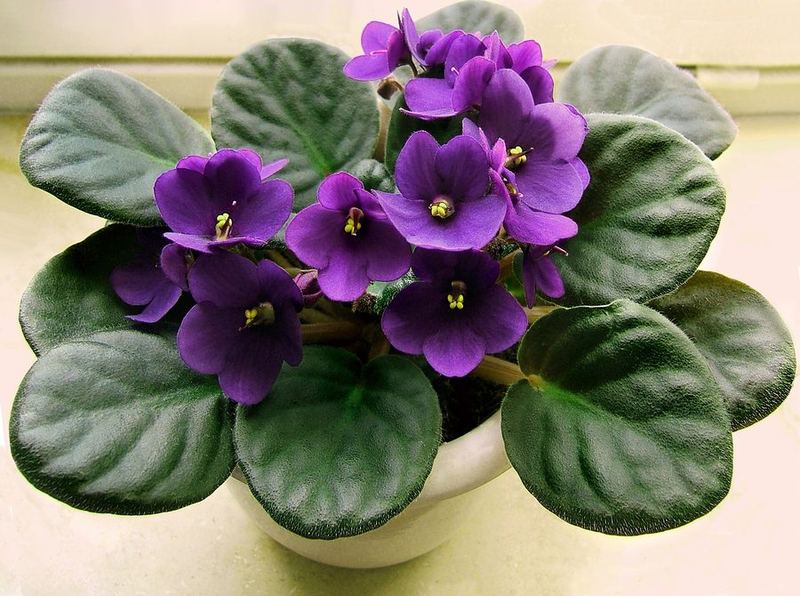
What is specific to this plant
- The leaves are covered in fine hairs that trap water, so cold water sitting on a leaf leaves a permanent pale ring. Water from below, or under the leaves, never over the top.
- Water pooling in the crown is the usual way an African violet is lost, and crown rot moves fast once it starts.
- A violet that will not flower is almost always short of light rather than short of feed.
What it could be, and how to tell
These look alike in a photograph, so each one below lists what you would ALSO see if that is the cause. Work down the list and stop at the one where the other symptoms match too.
1. A second crown taking the room the flower stalks needed
What else you would see
- a smaller rosette pushed up between the leaf stalks of the main one
- leaf stalks crowding and lifting each other instead of lying in a flat wheel
- a plant that looks fuller and bushier than it did a year ago, with nothing in flower since
- new leaves appearing at more than one point rather than only at the centre
What to do
- Take the side crowns off where they join the main stem, easing them out with the point of a knife rather than pulling, so the parent's own stalks are not torn away with them.
- Leave one growing point. A plant kept to a single crown puts what it earns into flower stalks instead of more leaves.
- Pot the removed crowns up separately if you want more plants, and expect them to grow for a long while before they flower at all.
- Keep water out of the centre while the cuts close, since the crown is where this plant is usually lost.
2. Enough light to grow leaves, for too little of the day to set buds
What else you would see
- leaves a flat dark green and noticeably larger than the ones below them
- leaf stalks lengthening and lifting the leaves upward instead of holding them flat
- steady new leaves at the centre and no flower stalk for months
- a position that is bright for part of the day and dim for the rest of it
What to do
- Move it somewhere it gets bright indirect light steadily through the day rather than for an hour or two at one end of it.
- An east-facing sill usually suits it better than a bright-looking spot set back from the window, where the plant is in shade for most of the hours that count.
- A lamp left on above the plant through the working day does the same job, and does it more reliably than a window does in winter.
- Give the change a full growing season before judging it. Flower stalks follow a season of better light, not a fortnight of it.
3. A pot much wider than the rosette sitting in it
What else you would see
- the plant sitting in the middle of its pot with bare mix all the way round it
- mix that stays damp for a long time out at the edges, where no root has reached
- healthy leaves and steady growth with no flower stalks for a year or more
- a move into something larger not long before the flowering stopped
What to do
- Move it back into a pot only a little wider than the plant, taking away the mix no root has reached.
- Repot into fresh light, airy violet mix rather than reusing what came out, since mix that sat wet and unrooted for months goes sour.
- Water from below and let the pot take up what it wants, which is far easier to judge once the pot is the right size.
- Expect leaves first and flowers after. The plant finishes the roots it has already started before it spends anything on buds.
4. Mix left in the pot too long, and the crust it leaves on the rim
What else you would see
- a hard pale crust on the rim of the pot, or across the surface of the mix
- leaf stalks browning and collapsing at the point where they cross that rim
- mix gone dense and dark, no longer springing back when you press it
- a plant that flowered well in its first year and less in each one since
What to do
- Repot into fresh light, airy violet mix, shaking the old mix off the roots rather than dropping the old ball straight into new.
- Flush the pot through with plain water several times first where there is a crust, so what has built up in the mix leaves through the drainage holes.
- Keep the leaf stalks off a bare crusted rim, since that is where they scorch and collapse.
- Feed at the strength named on the label of whatever you use and no stronger, because the crust is what a plant fed past what it can use leaves behind.
5. Fed for foliage rather than for flowers
What else you would see
- a full flat rosette of large healthy leaves and not one flower stalk
- a feed given at the same strength the whole year round
- a white crust on the pot rim or on the surface of the mix
What to do
- Change to a feed formulated for flowering rather than for foliage, and follow the strength on the label of whatever you buy.
- Stop feeding as the plant moves into its resting season, and start again when new growth does.
- Flush the pot through with plain water first if there is a crust on the rim, since built-up salts damage the fine roots that a flower depends on.
Common questions
How long should I expect to wait before my african violet flowers?
Weeks to a couple of months once the light is right and the plant is back to a single crown, and not at all while either of those is still wrong. Watch the centre of the rosette: the stalks push up from between the leaf stalks there, so that is where the first sign shows.
Does repotting make an african violet more likely to flower?
Often yes, because two of the reasons this plant stops flowering are cured by it: mix that has packed down and gone stale, and a pot much wider than the plant. Repotting one already sitting snugly in fresh mix does the opposite and costs it a season, since it rebuilds roots before it spends anything on stalks.
Is there a feed that will force it to flower?
No. A feed can remove a shortage that was holding the plant back, but nothing in a bottle substitutes for the light and the temperature change that actually start the process. Feeding harder to compensate builds salts in the mix and damages the roots the flowers depend on.
Before you act on any of this
This is general plant care guidance for a plant, not advice about people or animals. We never tell you whether a plant is safe to eat or touch, and we never tell you a plant is safe for a child or a pet. If a child or animal may have eaten any part of a plant, contact Poison Control (US 1-800-222-1222) or a vet immediately rather than reading further.
Treatment advice here is deliberately category level. We do not give product names, mixing ratios or application intervals. Whatever the label on the product in your hand says is the instruction that counts, and following it is your responsibility.
Where this comes from
The general horticultural facts behind this differential come from published university extension and Royal Horticultural Society guidance. What is specific to this plant, and the order the causes are ranked in, is ours, and the methodology page says where that reasoning stops being reliable.
- Indoor Plants: WateringClemson Cooperative Extension Home and Garden Information Center
- Lighting for Indoor PlantsUniversity of Maryland Extension
- How to grow houseplantsRoyal Horticultural Society
Other african violet problems
- African violet yellow leaves
- African violet leaves curling
- African violet leaves drooping
- African violet root rot
- African violet leaves turning brown
- African violet brown spots on leaves
- African violet problems
Not sure which one it is?
PlantRx is an iPhone app that reads the photo and gives you the same kind of ranked differential you just read, for your plant specifically, with the evidence it based each answer on. The first diagnosis is free, in full. There is no subscription and no account.