Jade plant dropping leaves
Leaves coming off a jade plant look like thirst and usually are not. This plant stores its water in its leaves, so a fallen leaf is a record of what the plant was doing when it let go, and picking one up settles more of the question than anything you can see on the plant itself.
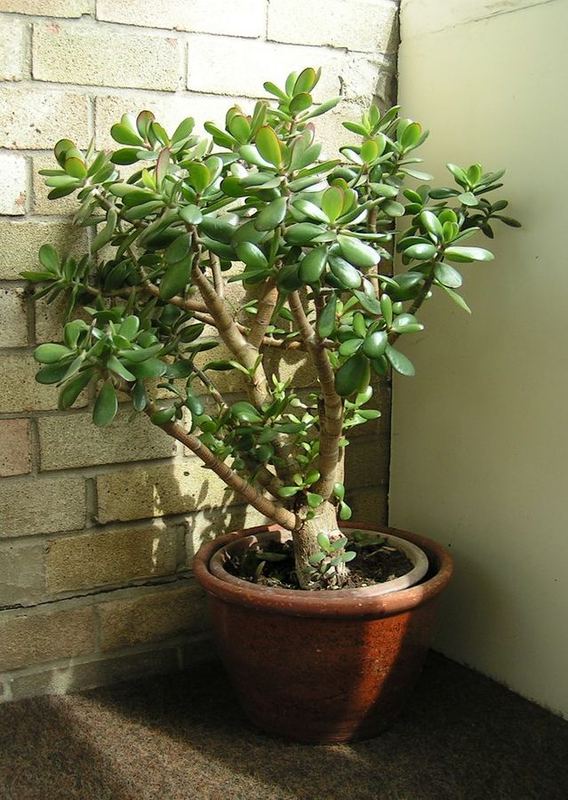
What is specific to this plant
- A jade stores water in its leaves, so the leaves are the gauge: wrinkled and soft-but-flexible means thirsty, translucent and squishy means drowning.
- Leaf drop at a touch usually follows a period of wet soil, not a period of dry soil.
- In low light a jade stretches, and the stretched growth never compacts again even after you move it.
What it could be, and how to tell
These look alike in a photograph, so each one below lists what you would ALSO see if that is the cause. Work down the list and stop at the one where the other symptoms match too.
1. Plump leaves coming away from a pot that stayed wet
What else you would see
- fallen leaves that are firm and full rather than thin and creased
- leaves detaching cleanly at the stem, often at a touch or when the pot is carried
- mix that has been damp for a week or more
- the stem darker or softer where it meets the mix
What to do
- Stop watering and let it dry the whole way through before the next one, which on this plant means the whole pot, or very nearly.
- Empty any saucer or outer pot. Water held out of sight keeps the mix wet whatever you change above it.
- Repot into fresh gritty cactus or succulent mix if the current mix holds water for more than a few days, cutting away any soft brown root first.
2. Wrinkled leaves shed at the end of a long dry spell
What else you would see
- fallen leaves thin, creased and flexible rather than plump
- the leaves still on the plant soft and wrinkled but not translucent
- a very light pot, and mix pulled away from the pot wall
- the lowest leaves going first while the tips stay full
What to do
- Water thoroughly until it runs from the bottom of the pot, then let it drain and leave it alone.
- Expect the remaining leaves to plump up again over the following week. The shed ones do not come back.
- Water on the state of the leaves rather than on a fixed day, since this plant shows thirst clearly and early.
3. A sudden change of light after months in one place
What else you would see
- the drop starting within a couple of weeks of the plant being moved
- a move outdoors for the summer, or back indoors for the winter
- pale or bleached patches on the leaves that took the most sun
- the plant otherwise firm, with dry mix and a solid stem
What to do
- Make the change in stages over two or three weeks rather than in one step, in both directions.
- Give a plant going outside some shade at first, since the leaves it grew indoors scorch in full sun.
- Leave it alone while it re-equips. Watering more to compensate is what turns this into the wet version of leaf drop.
4. A cold night spent against the glass
What else you would see
- loss concentrated on the side of the plant facing the window
- soft, dark or translucent patches on leaves that touched the glass
- the drop appearing within a few days of a cold snap
- the rest of the plant, away from the window, unaffected
What to do
- Move the plant far enough from the glass that no leaf touches it, and away from any door that opens to the outside.
- Leave marked leaves in place unless they have gone soft, since they still work.
- Keep it drier through cold weather. Cold and wet together do far more damage than either alone.
5. Stretched growth shedding the leaves it cannot supply
What else you would see
- long bare lengths of stem with leaves only at the tips
- wide gaps between leaf pairs on growth made in the last year or two
- leaves smaller and thinner than the ones lower down
- the plant leaning toward the nearest window
What to do
- Move it to several hours of direct sun, turning it every few weeks so it grows evenly.
- Cut the stretched lengths back in spring if you want a compact plant. The cuts are what force branching, not the move alone.
- Root the healthy tips you remove rather than discarding them, laying them on barely damp mix once the cut has dried.
Common questions
Will the bare stems on my jade plant grow new leaves?
Not along their length. New growth comes from the tips and from buds close to a cut, so a long bare stem stays bare unless you shorten it. Cutting it back in spring is what makes the plant branch and refill.
Can I do anything with the leaves that fell off?
A firm, undamaged fallen leaf will often root if you lay it on barely damp gritty mix and leave it dry at first. A wrinkled or soft one will not. It is slow either way, so treat it as a bonus rather than as a recovery plan.
How much leaf loss is normal on a jade plant?
The occasional old leaf low down, coming off gradually while the plant thickens, is ordinary. Several leaves at once, or leaves coming away at a touch anywhere on the plant, is not, and the state of the fallen leaf tells you which of the causes above it is.
Before you act on any of this
This is general plant care guidance for a plant, not advice about people or animals. We never tell you whether a plant is safe to eat or touch, and we never tell you a plant is safe for a child or a pet. If a child or animal may have eaten any part of a plant, contact Poison Control (US 1-800-222-1222) or a vet immediately rather than reading further.
Treatment advice here is deliberately category level. We do not give product names, mixing ratios or application intervals. Whatever the label on the product in your hand says is the instruction that counts, and following it is your responsibility.
Where this comes from
The general horticultural facts behind this differential come from published university extension and Royal Horticultural Society guidance. What is specific to this plant, and the order the causes are ranked in, is ours, and the methodology page says where that reasoning stops being reliable.
- Indoor Plants: WateringClemson Cooperative Extension Home and Garden Information Center
- Lighting for Indoor PlantsUniversity of Maryland Extension
- How to grow houseplantsRoyal Horticultural Society
Other jade plant problems
- Jade plant leaves drooping
- Jade plant dying
- Jade plant black spots
- Jade plant spider mites
- Jade plant leaves turning yellow
- Jade plant problems
- Jade plant brown spots on leaves
- Jade plant leaves curling
- Jade plant root rot
Not sure which one it is?
PlantRx is an iPhone app that reads the photo and gives you the same kind of ranked differential you just read, for your plant specifically, with the evidence it based each answer on. The first diagnosis is free, in full. There is no subscription and no account.