Spider plant bugs
Most pests on a spider plant are identified by what they leave behind rather than by seeing the insect: sticky residue, fine webbing, white fluff or small flies. Working out which one you have decides everything about what to do next.
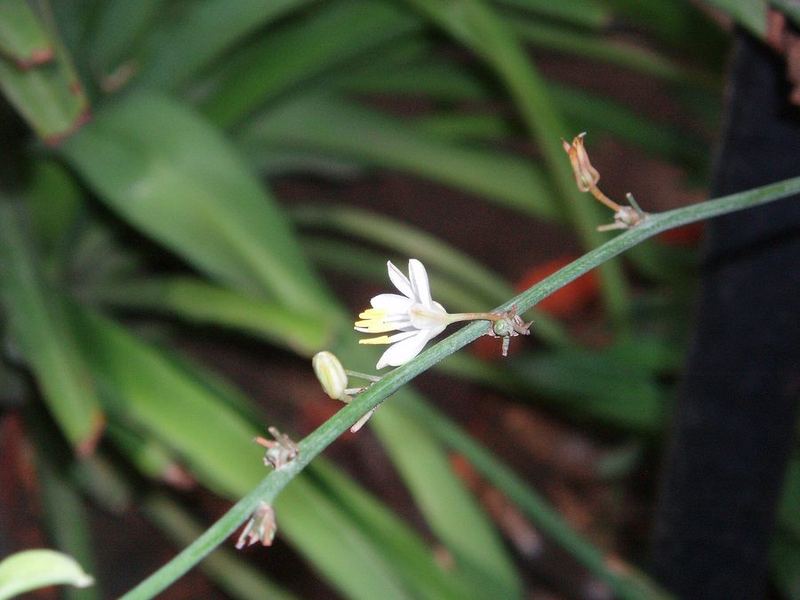
What is specific to this plant
- Spider plants are the textbook fluoride-sensitive houseplant. Brown tips with a thin yellow band behind them, on a plant that is growing well and making pups, are the water rather than the care.
- Producing pups is a sign of a comfortable plant, so a pupping spider plant with cosmetic tip damage is not sick.
- The thick white roots store water, which is why it survives neglect and resents constant wet.
What it could be, and how to tell
These look alike in a photograph, so each one below lists what you would ALSO see if that is the cause. Work down the list and stop at the one where the other symptoms match too.
1. Insects massing on the flower stalk, not the leaves
What else you would see
- clusters packed along the thin arching stalk that carries the pups
- sticky residue on leaves directly below that stalk
- the leaves themselves clean when inspected
- pups at the end of the stalk looking stunted
What to do
- Rinse the stalk thoroughly, working along its whole length and around each pup.
- Cut the stalk off entirely if it is heavily infested and you do not need the pups.
- Check any pups before potting them up, since they carry the problem with them.
- If you choose a treatment product, follow its label exactly. The label is the legal instruction and it overrides anything written here.
2. Spider mites
What else you would see
- fine pale stippling or speckling across the leaf rather than solid patches
- very fine webbing where the leaf meets the stem
- a dusty look to the underside of the leaf, worst in warm dry air
What to do
- Isolate the plant from your others straight away, before anything else.
- Rinse the leaves thoroughly, undersides included, with a strong spray of water, and repeat every few days. Mites breed faster than a single treatment can keep up with.
- Raise the humidity around the plant. Mites thrive in warm dry air and struggle in humid air.
- If you choose to use a treatment product, follow the label on it exactly. The label is the legal instruction and it overrides anything written here.
3. Fungus gnats
What else you would see
- small dark flies running across the surface of the mix or drifting around the pot
- mix that is constantly damp at the top
- no damage visible on the leaves themselves
What to do
- Let the mix dry properly between waterings, this far down: the top inch. Removing the wet surface layer removes the nursery.
- Water from below for a while so the surface stays dry.
- Sticky traps catch the adults, but the wet mix is what has to change.
4. Mealybugs
What else you would see
- small white cottony tufts in leaf joints and on stems
- sticky residue on the leaves or the surface below the plant
- growth distorted or stunted at the tips
What to do
- Isolate the plant.
- Wipe off every visible insect physically, getting into the leaf joints where they hide.
- Check again every few days for several weeks, since eggs hatch after the first pass.
- If you use a treatment product, follow its label exactly.
5. Scale
What else you would see
- small brown bumps along stems and leaf undersides that do not brush off easily
- sticky residue on leaves, furniture or the floor beneath
- slow decline with no obvious watering explanation
What to do
- Isolate the plant.
- Scrape or wipe the scales off physically. Their shells protect them, so removal by hand is what actually works.
- Inspect weekly for a month, since the mobile young are easy to miss.
- If you use a treatment product, follow its label exactly.
Common questions
What are the small flies around my plant?
Almost certainly fungus gnats, and they are a symptom of mix that stays wet at the surface rather than a threat to the plant. Let the top of the pot dry properly and they lose their breeding ground.
What is the sticky residue on the leaves?
Honeydew, excreted by sap-feeding insects: usually scale, mealybugs or aphids. Sticky leaves mean you should be looking for an insect on the stems and undersides, not adjusting your watering.
Do I need to treat my other plants too?
Check every plant that was standing near it, and isolate the affected one first. Most infestations are found on one plant and are already on two.
Before you act on any of this
This is general plant care guidance for a plant, not advice about people or animals. We never tell you whether a plant is safe to eat or touch, and we never tell you a plant is safe for a child or a pet. If a child or animal may have eaten any part of a plant, contact Poison Control (US 1-800-222-1222) or a vet immediately rather than reading further.
Treatment advice here is deliberately category level. We do not give product names, mixing ratios or application intervals. Whatever the label on the product in your hand says is the instruction that counts, and following it is your responsibility.
Where this comes from
The general horticultural facts behind this differential come from published university extension and Royal Horticultural Society guidance. What is specific to this plant, and the order the causes are ranked in, is ours, and the methodology page says where that reasoning stops being reliable.
- Integrated Pest Management (I.P.M.) for Spider MitesClemson Cooperative Extension Home and Garden Information Center
- Fungus Gnats on HouseplantsUniversity of Wisconsin-Madison Division of Extension
- MealybugsUniversity of Wisconsin-Madison Division of Extension
- Scale Insects on HouseplantsIowa State University Extension and Outreach
- Glasshouse red spider miteRoyal Horticultural Society
Other spider plant problems
- Spider plant brown tips
- Spider plant yellow leaves
- Spider plant leaves curling
- Spider plant leaves turning brown
- Spider plant drooping
- Spider plant dying
- Spider plant root rot
- Spider plant brown spots on leaves
- Spider plant not growing
Not sure which one it is?
PlantRx is an iPhone app that reads the photo and gives you the same kind of ranked differential you just read, for your plant specifically, with the evidence it based each answer on. The first diagnosis is free, in full. There is no subscription and no account.