Umbrella plant and schefflera drooping
Umbrella plant and schefflera are the same plant under two names, so this page covers both. It droops in a way most houseplants cannot, because its leaf is built differently: a ring of leaflets radiating from the end of a single long stalk, like the ribs of an umbrella. That structure has two hinges, one at each leaflet and one where the stalk meets the stem, and which of them has given way tells you what is wrong before you touch the soil.
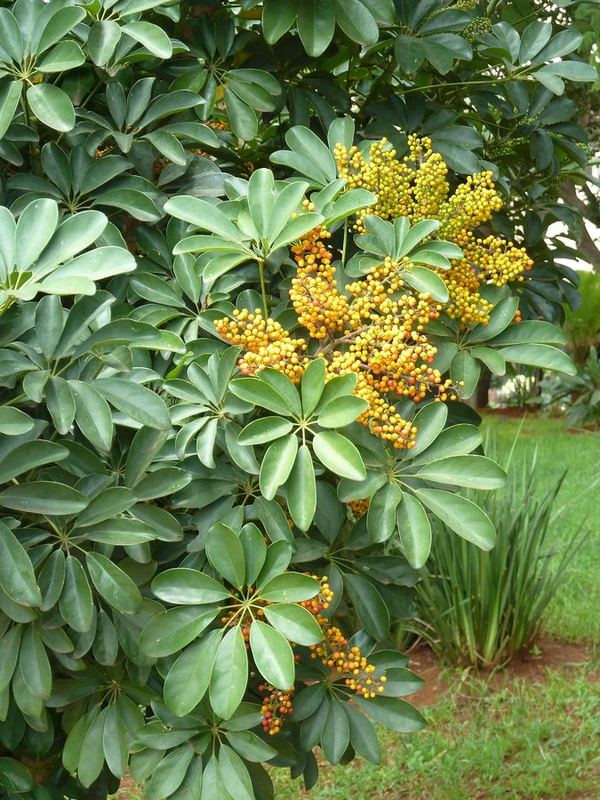
What is specific to this plant
- Look at the leaflets and the stalk separately. Leaflets that have folded down while the stalk is still held out horizontally is a water signal. A stalk that has dropped as a unit with its leaflets still spread is a stem or a pest signal.
- This plant sheds its inner and lower leaves first when light is short, which leaves long bare stems with tufts at the ends. Those bare stems are the mechanical cause of the third droop on this list.
- It is one of the more scale-prone houseplants, and scale is easy to miss because it sits along the stalks looking like part of the stem rather than like an insect.
What it could be, and how to tell
These look alike in a photograph, so each one below lists what you would ALSO see if that is the cause. Work down the list and stop at the one where the other symptoms match too.
1. Leaflets folding down while the stalk stays rigid
What else you would see
- every leaflet hanging from its attachment point while the stalk itself is still held out
- the whole plant doing it at once rather than one stalk at a time
- the pot light to lift, and the mix shrunk away from the pot wall
- the leaflets recovering their spread within a day of a thorough soak
What to do
- Water thoroughly until it runs freely from the drainage holes, rather than a splash at the surface.
- If the mix has gone water-repellent and the water runs straight through, stand the pot in a basin for half an hour to rewet it.
- Water when the top two inches are dry, checking with a finger rather than on a fixed day of the week.
2. Overwatering, and the root rot that follows
What else you would see
- the plant limp although the pot is heavy and the mix is damp
- lower leaves yellowing and dropping at the lightest touch
- mix still wet several days after watering
- a sour smell at the drainage holes, or small flies around the pot
What to do
- Stop watering until the top two inches are dry.
- Check that the pot drains and empty any saucer or decorative outer pot it stands in. Water held out of sight keeps the mix wet whatever you change above it, and it stays invisible until you lift the pot.
- If the roots are soft and brown, trim them back to firm tissue with a blade sterilised first and repot into fresh free-draining potting mix.
3. A stretched stem that can no longer hold its head up
What else you would see
- long bare stretches of stem with all the growth bunched at the tips
- the stem leaning or arching rather than the leaves themselves wilting
- leaflets still spread flat and firm on a stem that has bowed over
- no change at all after watering, in either direction
What to do
- Cut the stem back hard, above a node on solid wood. It branches from below the cut and the new growth comes back shorter and better supported.
- Move it into brighter indirect light so the regrowth does not stretch the same way.
- Turn the pot regularly so the plant does not lean toward one window and lengthen the same stems again.
4. Scale feeding along the leaf stalks
What else you would see
- sticky patches on the leaves, on the stems or on the floor below the plant
- small raised brown or tan bumps along the stalks and where they meet the stem
- stalks drooping one at a time rather than the whole plant going together
- a sooty black film developing on the sticky areas
What to do
- Isolate the plant from the rest of your collection first, because scale spreads by crawling to whatever is touching.
- Wipe the stalks and stems physically, working along every joint where the stalks meet the stem, and repeat the inspection until you stop finding them.
- Cut out a stem that is heavily infested rather than trying to clean it.
- Wash the sticky residue off the leaves and off the floor, since the film feeds the sooty mould that follows.
5. Cold or a draught
What else you would see
- sudden droop within days of a cold snap or a move
- worst on the side facing a door, a window or a vent
- leaf drop following the droop rather than yellowing first
What to do
- Move it out of the path of an opening door and off a cold windowsill.
- Keep it clear of the airflow from heating and cooling vents.
Common questions
Is an umbrella plant the same thing as a schefflera?
Yes, for the plant sold as a houseplant. The NC State Extension Gardener Plant Toolbox files it as Heptapleurum actinophyllum, formerly Schefflera actinophylla, and lists Schefflera, Umbrella Tree, Octopus Tree and Starleaf among its common names. Note that umbrella plant is also used for the unrelated umbrella sedge, which is a water plant and nothing like this.
The leaflets are hanging but the stalks are fine. What does that mean?
That is the closest thing this plant has to a clear thirst signal. The leaflets hinge where they attach and fold down when the plant is short of water, while the stalk stays where it is. Water thoroughly and check the next day: if they have lifted back to horizontal, that was it.
My umbrella plant has long bare stems with leaves only at the tips. Can I fix it?
Only by cutting. This plant sheds its inner and lower leaves in poor light and the bare section never refills on its own. Cut the stem back above a node on solid wood and it will branch from below the cut, then keep the regrowth in brighter indirect light so it does not stretch again.
Is an umbrella plant poisonous to cats, dogs or children?
Umbrella plant contains calcium oxalate crystals and is widely listed as harmful to pets and children if chewed. We do not tell you that any plant is safe. If a pet or a child may have chewed any part of one, contact a vet, or Poison Control on 1-800-222-1222 in the US, immediately rather than waiting to see what happens.
Before you act on any of this
This is general plant care guidance for a plant, not advice about people or animals. We never tell you whether a plant is safe to eat or touch, and we never tell you a plant is safe for a child or a pet. If a child or animal may have eaten any part of a plant, contact Poison Control (US 1-800-222-1222) or a vet immediately rather than reading further.
Treatment advice here is deliberately category level. We do not give product names, mixing ratios or application intervals. Whatever the label on the product in your hand says is the instruction that counts, and following it is your responsibility.
Where this comes from
The general horticultural facts behind this differential come from published university extension and Royal Horticultural Society guidance. What is specific to this plant, and the order the causes are ranked in, is ours, and the methodology page says where that reasoning stops being reliable.
- Overwatered Indoor PlantsUniversity of Maryland Extension
- Indoor Plants: WateringClemson Cooperative Extension Home and Garden Information Center
- Lighting for Indoor PlantsUniversity of Maryland Extension
- How to grow houseplantsRoyal Horticultural Society
Other umbrella plant problems
- Umbrella plant bugs
- Umbrella plant overwatered
- Umbrella plant leaves turning yellow
- Why is my umbrella plant dying
Related problems
Not sure which one it is?
PlantRx is an iPhone app that reads the photo and gives you the same kind of ranked differential you just read, for your plant specifically, with the evidence it based each answer on. The first diagnosis is free, in full. There is no subscription and no account.