Christmas cactus no flowers
Most Christmas cactus plants that refuse to flower are growing perfectly well, and that is the clue. Buds are triggered by conditions rather than earned by good care, so a plant kept comfortable all year round can grow steadily for years and never once be told to set them.
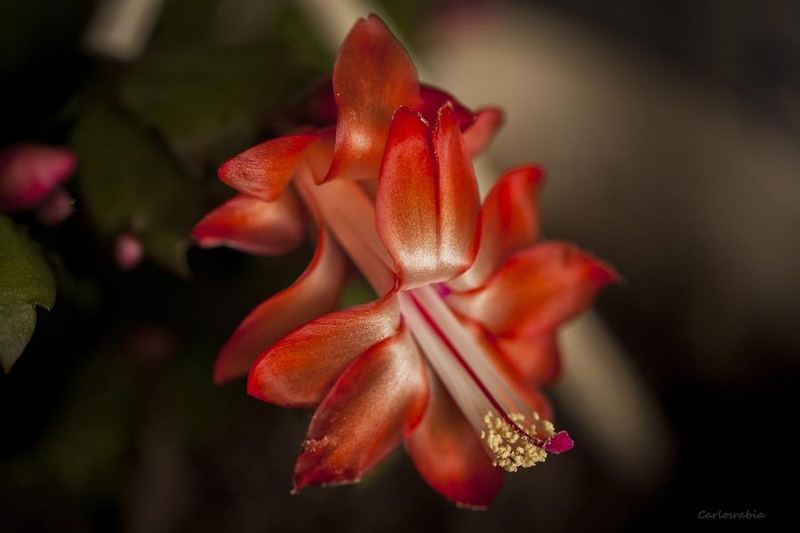
What is specific to this plant
- It is not a desert cactus. It is a Brazilian forest epiphyte, and it wants noticeably more water and humidity than a cactus mix suggests. Treating it like a desert plant is a common way to make one look permanently unwell.
- Dropping buds after being moved is normal and specific to this plant: it sets buds in one light direction and abandons them when that changes.
- Flowering is triggered by long, uninterrupted nights and cooler temperatures, so a plant that will not bloom is usually getting evening lamp light.
What it could be, and how to tell
These look alike in a photograph, so each one below lists what you would ALSO see if that is the cause. Work down the list and stop at the one where the other symptoms match too.
1. Evening lamp light breaking up the long nights
What else you would see
- a plant that grows well all year and has never budded in its current spot
- a position in a living room, hallway or kitchen where a light goes on in the evening
- a street lamp or a television facing the plant through the dark hours
- buds forming on a plant of the same age kept in a spare room
What to do
- Move it in early autumn to a room that is genuinely unused after dark, such as a spare bedroom.
- Keep it there through the autumn until you can see buds at the segment tips, then move it back.
- Cooler nights in that room help rather than hinder, so an unheated room is a better choice than a warm one.
2. Light that keeps it growing but will not fund buds
What else you would see
- segments that stay thin and flat rather than thickening at the tips
- growth carrying on through the year without a single bud
- the plant in a spot that never takes direct morning or late sun
What to do
- Move it to bright indirect light and leave it there. Flowering follows a whole season of better light, not a week of it.
- Judge the move by next season's growth rather than by whether buds appear within a few weeks.
- Do not compensate with feed. A plant short of light cannot use it, and the surplus builds up as salts in the mix.
3. No cool spell to set the buds
What else you would see
- a position near a radiator, or in a room heated evenly day and night
- an autumn that passed with no change at all in where the plant stands
- healthy segments and steady growth right through the winter
What to do
- Give it a cooler position through the autumn, such as an unheated bedroom or an enclosed porch that stays above freezing.
- Water more sparingly through that spell, enough that the segments do not shrivel.
- Bring it back into warmth once buds are visible, and then leave it alone.
4. Buds set, then dropped after the plant was moved
What else you would see
- small buds on the floor or on the surface of the mix rather than on the plant
- the loss starting within a week or two of the plant being moved or turned
- buds that were clearly forming earlier in the season
- no rot, no pest and no change in the segments themselves
What to do
- Choose the spot before the buds form, and then do not move or turn the pot until flowering is over.
- Keep it away from draughts and from anything that dries the air near it while the buds swell.
- Water steadily through budding. Letting it dry hard at that point costs buds as reliably as moving it does.
5. Fed for foliage rather than for flowers
What else you would see
- vigorous new segments through the whole growing season and no buds
- feeding carried on into autumn at the same strength as in summer
- a white crust on the pot rim or on the surface of the mix
What to do
- Change to a feed formulated for flowering rather than for foliage, and follow the strength on the label of whatever you buy.
- Stop feeding as the plant moves into its resting season, and start again when new growth does.
- Flush the pot through with plain water first if there is a crust on the rim, since built-up salts damage the fine roots that a flower depends on.
Common questions
How long should I expect to wait before my christmas cactus flowers?
Weeks rather than days once the plant has had a proper autumn of long dark nights and cooler temperatures, and not at all without one. Buds appear at the segment tips first, so that is where to look for the first sign it has worked.
Does repotting make a christmas cactus more likely to flower?
Usually the reverse. This plant flowers more freely when its roots are comfortably full of the pot, so moving it into something much larger tends to buy a year of growth rather than a season of flowers.
Is there a feed that will force it to flower?
No. A feed can remove a shortage that was holding the plant back, but nothing in a bottle substitutes for the light and the temperature change that actually start the process. Feeding harder to compensate builds salts in the mix and damages the roots the flowers depend on.
Before you act on any of this
This is general plant care guidance for a plant, not advice about people or animals. We never tell you whether a plant is safe to eat or touch, and we never tell you a plant is safe for a child or a pet. If a child or animal may have eaten any part of a plant, contact Poison Control (US 1-800-222-1222) or a vet immediately rather than reading further.
Treatment advice here is deliberately category level. We do not give product names, mixing ratios or application intervals. Whatever the label on the product in your hand says is the instruction that counts, and following it is your responsibility.
Where this comes from
The general horticultural facts behind this differential come from published university extension and Royal Horticultural Society guidance. What is specific to this plant, and the order the causes are ranked in, is ours, and the methodology page says where that reasoning stops being reliable.
- Low Light Impacts on Indoor PlantsUniversity of Maryland Extension
- Lighting for Indoor PlantsUniversity of Maryland Extension
- Indoor Plants: WateringClemson Cooperative Extension Home and Garden Information Center
- How to grow houseplantsRoyal Horticultural Society
Other christmas cactus problems
- Christmas cactus problems
- Christmas cactus drooping
- Christmas cactus root rot
- Christmas cactus overwatered
- Christmas cactus yellow leaves
- Christmas cactus dying
- Christmas cactus not growing
- Christmas cactus leaves curling
Not sure which one it is?
PlantRx is an iPhone app that reads the photo and gives you the same kind of ranked differential you just read, for your plant specifically, with the evidence it based each answer on. The first diagnosis is free, in full. There is no subscription and no account.