Money tree overwatered
Overwatering kills more money trees than anything else, and the reason it is so common is that it looks like thirst. A plant whose roots have rotted cannot drink, so it wilts while standing in water, and the instinctive response makes it worse.
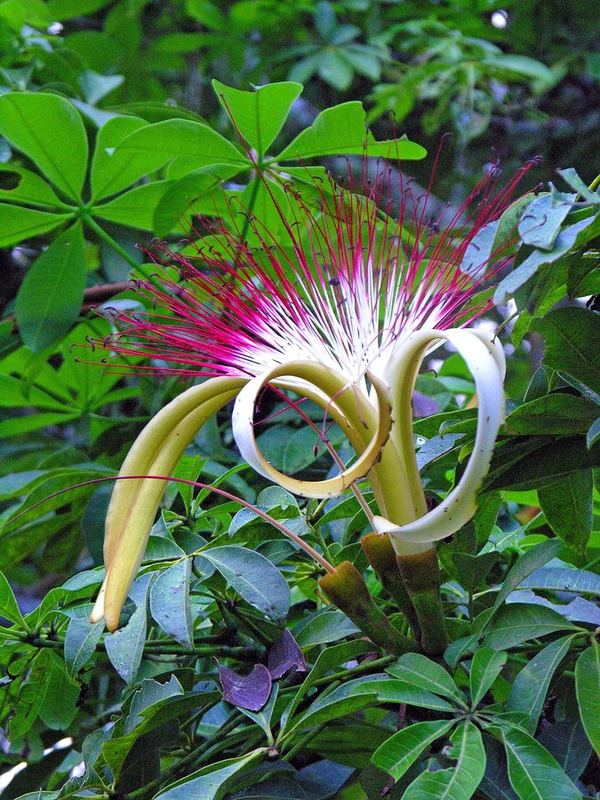
What is specific to this plant
- It is sold as a swamp plant, which misleads people into watering heavily. In a pot indoors, too much water is by a distance the most common problem.
- Almost every money tree comes in a decorative outer pot with no drainage, and water held out of sight in that pot is the classic way one is lost.
- Press the trunk at the soil line. A hard trunk means a plant that can releaf even if it is bare; a spongy one is the point at which most are lost.
What it could be, and how to tell
These look alike in a photograph, so each one below lists what you would ALSO see if that is the cause. Work down the list and stop at the one where the other symptoms match too.
1. Rot hidden between the stems of a braided trunk
What else you would see
- several stems plaited together at the base
- softness felt between the stems rather than on the outside
- one stem in the braid declining while the others hold
- damp trapped where the stems press against each other
What to do
- Stop watering and let the mix dry the whole way down before the next.
- Check between every pair of stems for softness, and cut a failed stem out of the braid.
- Water at the mix rather than over the trunk, and keep the base clear of debris.
2. Watering more often than the mix can dry
What else you would see
- one strand of the braided trunk going soft while the others stay hard
- leaves dropping green from the lower part of the canopy
- a mix that stays wet inside a decorative outer sleeve
What to do
- Stop watering and let it dry down this far: the top half of the pot.
- Check that the pot drains and empty any saucer or decorative outer pot it sits in. Water held out of sight keeps the mix wet whatever you change above it, and it stays invisible until you lift the pot.
- If the roots are soft and brown, trim them back to firm tissue with a blade sterilised first and repot into fresh free-draining potting mix.
3. A pot or cachepot that does not drain
What else you would see
- no drainage hole, or a decorative outer pot that holds water
- a saucer that is rarely emptied
- mix at the bottom of the pot far wetter than at the top
What to do
- Move the plant into a pot with real drainage holes.
- Tip out whatever collects in the saucer or cachepot after every watering.
4. The wrong mix for this plant
What else you would see
- a dense, peat-heavy mix rather than a free-draining potting mix
- mix that has compacted into a solid block over a year or two
- water pooling on the surface instead of soaking straight in
What to do
- Repot into fresh free-draining potting mix.
- Loosen any compacted mix from around the roots as you go.
5. Summer watering carried into winter
What else you would see
- the problem starting in autumn or winter on a plant that was fine all summer
- the same routine kept up year round
- lower light and cooler temperatures than in summer
What to do
- Water on dryness rather than on a fixed day of the week, and this is how far it should dry: the top half of the pot.
- Expect the gap between waterings to stretch considerably in winter.
Common questions
Can an overwatered plant be saved?
Usually, if you catch it before the stem or base goes soft. Roots can be replaced by the plant; a rotted stem generally cannot.
Should I let it dry out completely to fix it?
Letting it dry is right, but on its own it is slow and often too late. If the roots are already rotting, taking the plant out, cutting the dead roots away and repotting into fresh mix is far more likely to work.
How do I know how much water is right?
Stop measuring in quantity and start measuring in dryness. Water on dryness rather than on a fixed day of the week, and this is how far it should dry: the top half of the pot. Then water thoroughly, until it runs from the drainage holes, rather than a little and often.
Before you act on any of this
This is general plant care guidance for a plant, not advice about people or animals. We never tell you whether a plant is safe to eat or touch, and we never tell you a plant is safe for a child or a pet. If a child or animal may have eaten any part of a plant, contact Poison Control (US 1-800-222-1222) or a vet immediately rather than reading further.
Treatment advice here is deliberately category level. We do not give product names, mixing ratios or application intervals. Whatever the label on the product in your hand says is the instruction that counts, and following it is your responsibility.
Where this comes from
The general horticultural facts behind this differential come from published university extension and Royal Horticultural Society guidance. What is specific to this plant, and the order the causes are ranked in, is ours, and the methodology page says where that reasoning stops being reliable.
- Overwatered Indoor PlantsUniversity of Maryland Extension
- Root Rots on HouseplantsUniversity of Wisconsin-Madison Division of Extension
- Lighting for Indoor PlantsUniversity of Maryland Extension
- Indoor Plants: WateringClemson Cooperative Extension Home and Garden Information Center
- How to grow houseplantsRoyal Horticultural Society
Other money tree problems
- Money tree leaves turning yellow
- Money tree leaves drooping
- Money tree leaves turning brown
- Money tree root rot
- Money tree dying
- Money tree problems
- Money tree leaves curling
- Money tree brown spots on leaves
- Money tree brown tips
Not sure which one it is?
PlantRx is an iPhone app that reads the photo and gives you the same kind of ranked differential you just read, for your plant specifically, with the evidence it based each answer on. The first diagnosis is free, in full. There is no subscription and no account.