Money tree leaves turning yellow
Pachira aquatica is sold as a plant that likes wet feet because it grows in swamps. In a pot indoors that is misleading, and overwatering is by a distance the most common reason its leaves go yellow. The second most common is that you moved it.
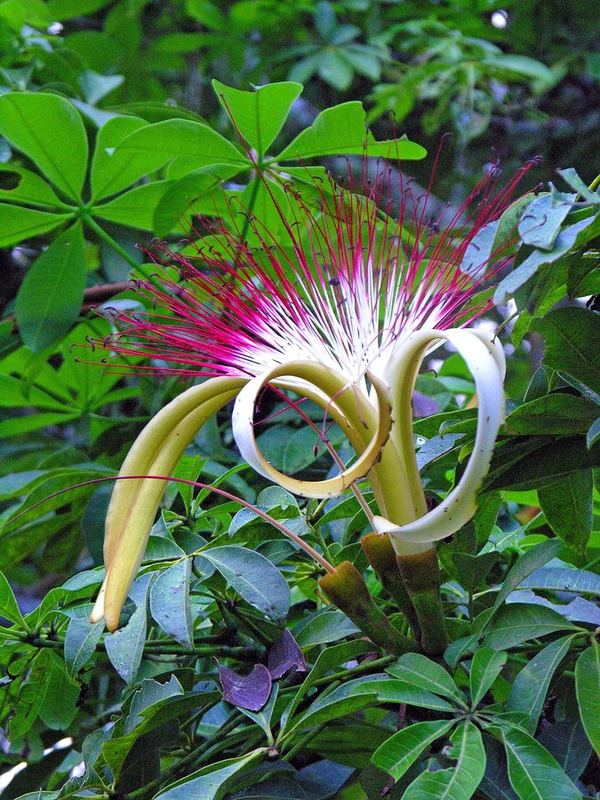
What it could be, and how to tell
These look alike in a photograph, so each one below lists what you would ALSO see if that is the cause. Work down the list and stop at the one where the other symptoms match too.
1. Overwatering
What else you would see
- soil damp for days after watering
- yellowing starting low and moving up
- a soft or spongy trunk at the soil line, which is serious
- fungus gnats around the pot
What to do
- Let the top half of the pot dry out before watering again.
- Make sure the decorative outer pot is not holding water against the roots. This is the single most common cause with braided money trees sold in a cachepot.
- If the trunk is soft, unpot immediately, cut away rotted roots with a sterilised blade and repot in fresh free-draining mix.
2. Acclimation after a move or a change of light
What else you would see
- yellowing and leaf drop within two to four weeks of arriving or being moved
- otherwise firm trunk and healthy new growth at the tips
- the drop slows and stops on its own
What to do
- Leave it alone. Do not repot, do not feed, do not increase watering to compensate.
- Keep it in one place with steady light and water on a consistent schedule.
3. Cold draughts
What else you would see
- damage on the side facing a door, window or vent
- onset after a cold snap or once the heating or air conditioning came on
- yellowing with some leaves dropping while still partly green
What to do
- Move it away from the draught. Money trees dislike sudden cold and dry moving air.
- Keep it above roughly 15C or 60F.
4. Too little light
What else you would see
- thin, stretched growth reaching toward the window
- lower leaves shed first
- new leaves smaller and paler
What to do
- Move to bright indirect light. It tolerates medium light but will slowly thin out in a dark corner.
- Turn the pot every couple of weeks so it grows evenly.
5. Nutrient shortage
What else you would see
- even pale yellowing across many leaves including new ones
- no repotting or feeding in over a year
- slow growth in spring and summer
What to do
- Feed during the growing season, following the instructions on the label of the product you buy.
- Repot into fresh mix if it has been more than two years.
Common questions
How often should I water a money tree?
By the soil, not by the calendar. Water thoroughly when the top half of the pot has dried, then let it drain completely. In an average home that lands somewhere between weekly and fortnightly, but it changes with season, pot size and light.
My money tree lost a lot of leaves at once. Is it dead?
Check the trunk. A firm, hard trunk means the plant is alive and can releaf even if it is bare. A soft or spongy trunk means rot, and that is the point at which most money trees are lost.
Should I cut the yellow leaves off my money tree?
You can, once they are more yellow than green. It is cosmetic. What matters is fixing the cause, otherwise the next leaves go the same way.
Before you act on any of this
This is general plant care guidance for a plant, not advice about people or animals. We never tell you whether a plant is safe to eat or touch, and we never tell you a plant is safe for a child or a pet. If a child or animal may have eaten any part of a plant, contact Poison Control (US 1-800-222-1222) or a vet immediately rather than reading further.
Treatment advice here is deliberately category level. We do not give product names, mixing ratios or application intervals. Whatever the label on the product in your hand says is the instruction that counts, and following it is your responsibility.
Where this comes from
The general horticultural facts behind this differential come from published university extension and Royal Horticultural Society guidance. What is specific to this plant, and the order the causes are ranked in, is ours, and the methodology page says where that reasoning stops being reliable.
- Diagnosing Houseplant Problems from Improper Environmental ConditionsIowa State University Extension and Outreach
- Indoor Plants: WateringClemson Cooperative Extension Home and Garden Information Center
- Lighting for Indoor PlantsUniversity of Maryland Extension
- How to grow houseplantsRoyal Horticultural Society
Other money tree problems
- Money tree leaves drooping
- Money tree leaves turning brown
- Money tree root rot
- Money tree dying
- Money tree problems
- Money tree leaves curling
- Money tree brown spots on leaves
- Money tree overwatered
- Money tree brown tips
Related problems
Not sure which one it is?
PlantRx is an iPhone app that reads the photo and gives you the same kind of ranked differential you just read, for your plant specifically, with the evidence it based each answer on. The first diagnosis is free, in full. There is no subscription and no account.