Corn plant leaves turning brown, and Dracaena generally
Corn plant is Dracaena fragrans, and it is sold under the bare genus name as often as under the common one, so this page covers both. Brown leaf tissue is dead and will not turn green again, which makes the useful question not how to fix the brown but what killed it. On this plant three answers dominate, and each leaves a different signature: where the brown starts, whether it is crisp or soft, and whether the cane underneath it is still solid.
First: this is often normal
The lowest ring of leaves browning and dropping while the crown keeps pushing new ones is how a cane extends. A corn plant sheds its oldest leaves from the bottom for its whole life. Worry about brown that appears in the newest growth, brown that takes a whole tuft at once, or brown on a plant that has stopped producing leaves at all.
What is specific to this plant
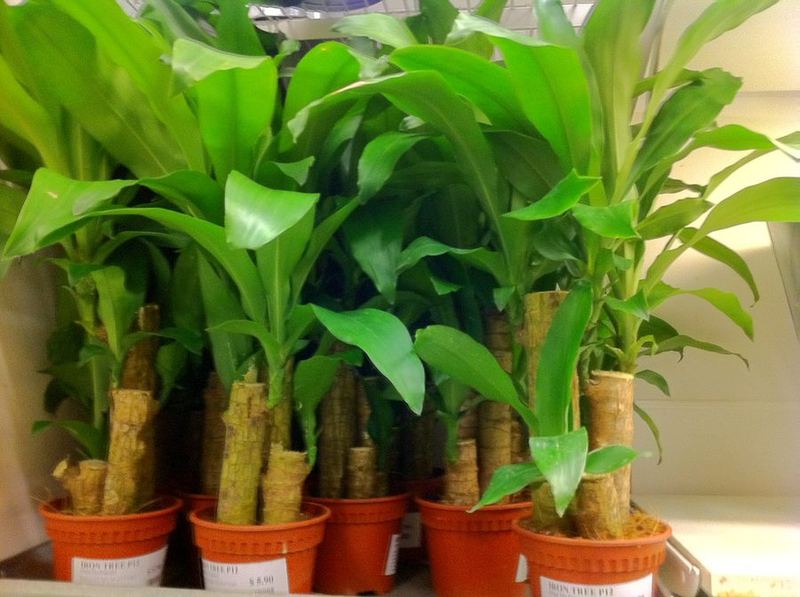
- The cane is the plant. What you bought is a cut length of stem with a tuft of growth at the top, and each tuft depends on the section of cane below it. Leaves browning tuft by tuft rather than leaf by leaf is a cane problem, and no change of watering will reach it.
- Healthy roots on this plant are orange-tan, not white. People who go looking for rot find orange roots, decide they have found it, and repot a plant that was fine. Colour settles nothing here; firmness does.
- Dracaena is one of the classic fluoride-sensitive houseplants. Fluoride travels in the transpiration stream and accumulates at the leaf margins, so tap water browns the edges of an otherwise thriving plant. The Pacific Northwest Pest Management Handbooks name Dracaena fragrans specifically.
- The Madagascar dragon tree sold as Dracaena marginata, with the thin red-edged leaves, is a different species in the same genus and fails in the same order. Everything below applies to it, with thinner leaves that show the damage sooner.
What it could be, and how to tell
These look alike in a photograph, so each one below lists what you would ALSO see if that is the cause. Work down the list and stop at the one where the other symptoms match too.
1. Fluoride and mineral load from tap water
What else you would see
- brown starting at the very tip and running back along the margin, with a narrow yellow band where the brown meets the green
- the plant otherwise healthy, still opening new leaves at the crown
- a pale crust on the soil surface or around the drainage holes
- older, longer-standing leaves worse than young ones, because the load accumulates
What to do
- Water with rainwater, distilled water or filtered water instead of straight from the tap.
- Flush the pot: pour a large volume of water through it slowly so accumulated salts leave by the drainage holes rather than staying in the mix.
- Avoid a potting mix that is heavily perlite, and avoid feeds built on superphosphate. Both raise the fluoride the roots see.
- Trim the dead margin at an angle following the leaf shape, leaving a hairline of brown so the cut does not open live tissue.
2. Root rot from a mix that never dries
What else you would see
- brown that is soft or leathery rather than crisp, spreading from the base of the blade outward
- lower leaves going first, several at once, often yellowing before they brown
- soil still wet days after watering, or a sour smell at the drainage holes
- the plant limp although the pot is heavy and damp
What to do
- Take it out of the pot, clear the wet mix off the roots, and cut every soft or hollow root back to firm tissue with a blade sterilised first.
- Repot into a free-draining mix, in a pot with real drainage that is only a little wider than the root mass.
- Water when the top two inches are dry rather than on a schedule, and never leave the pot standing in a full saucer.
3. A cane that has died back
What else you would see
- one whole tuft browning together while another tuft on the same plant stays green
- the cane wrinkled, or giving under thumb pressure somewhere along its length
- browning that carries on after the watering was corrected
- growth at the top that has stalled completely rather than slowed
What to do
- Cut the cane back to solid tissue, below the soft section, with a clean blade.
- Keep the remaining solid canes and let them regrow from the cut; a Dracaena buds again below a clean cut.
- Look at the drainage before assuming bad luck. A cane usually softens because it sat wet, so treat it as a root problem that reached the stem.
4. Cold air and draughts
What else you would see
- grey-brown blotches with a soft edge rather than a crisp margin
- worst on the side of the plant facing a door, a window or a vent
- the marks appearing within days of a cold snap and then stopping
- no matching change in the soil or the roots
What to do
- Move it away from the draught, out of the path of an opening door and off a cold windowsill.
- Keep it clear of the airflow from heating and cooling vents, which is cold or dry at the leaf even when the room reads warm.
- Leave the marked leaves in place unless they are more dead than alive. They still feed the cane.
5. Too much direct sun
What else you would see
- pale bleached patches that turn brown, on the upper surface of the highest leaves
- sharply bounded damage rather than a gradient
- the window-facing side hit and the shaded side clean
- onset after a move to a brighter spot or after a summer change in the sun angle
What to do
- Move it back from the glass into bright indirect light, which is what it wants anyway.
- Reintroduce brighter positions gradually rather than in one move, since the leaves acclimatise slowly.
6. Repeated hard dry-outs
What else you would see
- brown running well down the blade rather than confined to the tip and margin
- leaves creased or folded along the midrib before you water
- the pot noticeably light, and the mix shrunk away from the pot wall
- water running straight through and out without wetting the middle of the root ball
What to do
- Rewet a shrunken root ball by standing the pot in water until the surface is damp, then let it drain fully.
- Water when the top two inches are dry, checking with a finger rather than by the calendar.
Common questions
Is a corn plant the same thing as a Dracaena?
Yes. Corn plant is Dracaena fragrans, and the NC State Extension Gardener Plant Toolbox lists plain Dracaena among its common names alongside corn plant, cornstalk plant and Janet Craig. The Madagascar dragon tree sold as Dracaena marginata is a different species in the same genus, and browns for the same reasons in the same order.
Why are the bottom leaves browning while the top of the plant looks fine?
That is usually the cane extending. A corn plant grows from the crown and lets its oldest leaves go from the bottom, so a slow ring of browning at the base while the top produces new growth is ordinary. It is worth a second look only if the leaves are going faster than they are being replaced.
Should I cut the brown parts off?
Only for appearance. Dead tissue does not come back and cutting it does not stop the cause. Trim at an angle to follow the leaf shape and leave a hairline of brown, because cutting into green tissue opens a fresh brown edge. Take a whole leaf off at the base when it is more dead than alive.
The roots are orange. Is that root rot?
Not on this plant. Orange-tan is the healthy root colour for a Dracaena, which catches out anyone expecting the white roots of a pothos. Press them instead: firm is healthy however orange it looks, and soft or hollow is rot however pale it looks.
Before you act on any of this
This is general plant care guidance for a plant, not advice about people or animals. We never tell you whether a plant is safe to eat or touch, and we never tell you a plant is safe for a child or a pet. If a child or animal may have eaten any part of a plant, contact Poison Control (US 1-800-222-1222) or a vet immediately rather than reading further.
Treatment advice here is deliberately category level. We do not give product names, mixing ratios or application intervals. Whatever the label on the product in your hand says is the instruction that counts, and following it is your responsibility.
Where this comes from
The general horticultural facts behind this differential come from published university extension and Royal Horticultural Society guidance. What is specific to this plant, and the order the causes are ranked in, is ours, and the methodology page says where that reasoning stops being reliable.
- Diagnosing Houseplant Problems from Improper Environmental ConditionsIowa State University Extension and Outreach
- Indoor Plants: WateringClemson Cooperative Extension Home and Garden Information Center
- Lighting for Indoor PlantsUniversity of Maryland Extension
- How to grow houseplantsRoyal Horticultural Society
Other corn plant problems
- Corn plant leaves turning yellow, and Dracaena
- Corn plant leaves drooping
- Corn plant dying
- Corn plant and Dracaena brown tips
- Corn plant and Dracaena curling leaves
- Corn plant brown spots on leaves
Related problems
Not sure which one it is?
PlantRx is an iPhone app that reads the photo and gives you the same kind of ranked differential you just read, for your plant specifically, with the evidence it based each answer on. The first diagnosis is free, in full. There is no subscription and no account.