Corn plant leaves turning yellow, and Dracaena
Corn plant is Dracaena fragrans, and it is sold under the bare genus name about as often as under the common one, so this page covers both. What matters on this plant is not that a leaf is yellow but where it sits. The plant is a cut cane with a growing crown at the top, so it feeds from the bottom upward and sheds from the bottom upward, and a yellow leaf in the wrong place means something quite different from a yellow leaf in the expected one.
First: this is often normal
The lowest ring of leaves going yellow, slowly and evenly, while the crown keeps opening new ones is how a cane gains height. Every corn plant does this for its whole life. Let the leaf come away on its own rather than pulling it, because pulling tears the sheath off the cane.
What is specific to this plant
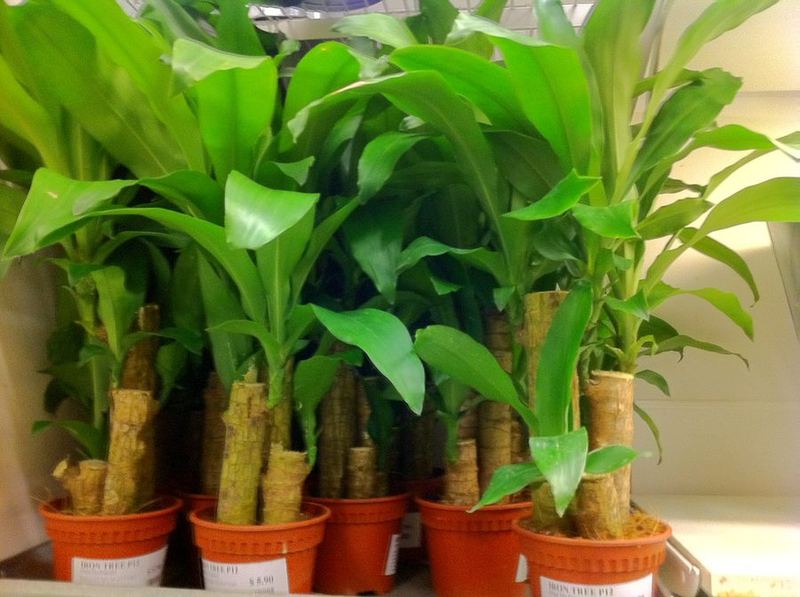
- The cane is the plant. What you bought is a cut length of stem rooted in place, with a tuft of growth at the top, and each tuft lives on the section of cane below it. That is why a whole tuft can go while the tuft beside it stays green.
- Healthy roots here are orange-tan, not white. People go looking for rot, find orange roots and conclude they have found it. Colour settles nothing on a Dracaena; firmness does.
- Dracaena fragrans is one of the classic fluoride-sensitive houseplants, and the fluoride does not only come from the tap. The Pacific Northwest Pest Management Handbooks and Clemson's Home and Garden Information Center both name the potting medium and phosphate feeds as sources alongside fluoridated water.
- The Madagascar dragon tree sold as Dracaena marginata is a different species in the same genus grown the same way, on a thinner cane with narrower leaves. Everything below applies to it, and shows up sooner because there is less leaf to hide it.
What it could be, and how to tell
These look alike in a photograph, so each one below lists what you would ALSO see if that is the cause. Work down the list and stop at the one where the other symptoms match too.
1. The cane shedding its lowest tier
What else you would see
- yellowing strictly from the bottom ring upward, never starting in the middle of the plant
- one or two leaves at a time rather than a tier going at once
- the crown still opening new leaves at a normal rate
- the yellow even across the blade rather than patchy or banded
What to do
- Leave the leaf until it comes away with no resistance, so the sheath separates cleanly from the cane.
- Do not increase watering or feeding to stop it. Neither one is the cause and both make the next problem on this list more likely.
2. Rot reaching the leaf sheath where it wraps the cane
What else you would see
- yellow starting at the base of the blade where it wraps the cane, rather than at the tip
- the leaf limp and slightly translucent instead of dry, and easy to pull off
- several leaves in the same tier going together
- mix still wet days after watering, or a sour smell at the drainage holes
What to do
- Stop watering and take the plant out of the pot to look at the roots. Ignore the orange colour and press them: soft or hollow is rot, firm is not.
- Cut soft roots back to firm tissue with a blade sterilised first, and repot into a free-draining mix in a pot only a little wider than the root mass.
- If the cane itself gives anywhere along its length, cut it back to solid tissue below the soft section. A Dracaena buds again below a clean cut.
- Empty any saucer or decorative outer pot. Water held out of sight is the usual reason the mix never dries.
3. A cane that never rooted properly after cutting
What else you would see
- a whole tuft yellowing evenly and slowly while another cane in the same pot looks fine
- the cane rocking in the mix when you push it, instead of being anchored
- soil that stays wet for a long time because almost nothing is drinking from it
- no new leaf from that crown for a long stretch, rather than slow growth
What to do
- Treat the pot as holding more plant than it has roots for: water sparingly, because the unrooted cane is drinking nothing and the mix around it stays wet.
- Lift the failing cane out on its own and pot it separately in a small pot of free-draining mix, so its share of the water matches its share of the roots.
- If the cut base has gone soft, trim back to solid tissue before repotting it.
4. Fluoride from the potting mix and the feed
What else you would see
- a narrow yellow band where dead brown tissue meets living green, at the tip and along the margin
- damage on the oldest leaves first, because the load builds up over time
- no improvement after switching to filtered or rain water
- a mix that is visibly heavy on white perlite granules
What to do
- Repot into a mix that is not heavily perlite, and stop using a feed built on superphosphate.
- Flush the pot: pour a large volume of water through it slowly so accumulated salts leave by the drainage holes instead of staying in the mix.
- Trim the dead margin at an angle following the leaf shape, leaving a hairline of brown so the cut does not open live tissue.
5. Not enough light
What else you would see
- each new leaf from the crown smaller and paler than the one before it
- lower leaves shed faster than the crown replaces them
- the plant leaning hard toward the window
What to do
- Move it closer to a window, keeping it out of direct midday sun.
- Turn the pot every few weeks so the whole crown gets the same light and the cane grows straight.
6. Cold or a draught
What else you would see
- yellowing worst on the side facing a door, a window or a vent
- the marks appearing within days of a cold snap and then stopping
- grey-toned yellow with a soft edge rather than a clean even yellow
What to do
- Move it out of the path of an opening door and off a cold windowsill.
- Keep it clear of the airflow from heating and cooling vents, which is dry or cold at the leaf even when the room reads warm.
Common questions
Is a corn plant the same thing as a Dracaena?
Yes. Corn plant is Dracaena fragrans, and the NC State Extension Gardener Plant Toolbox lists plain Dracaena among its common names alongside corn plant, cornstalk plant and Janet Craig. This page used to be two, one under each name, arguing the same evidence.
Should I cut off a yellow leaf?
Only once it is more yellow than green, and then take the whole leaf rather than part of it. Pulling a leaf that is still attached tears the sheath away from the cane and leaves an open wound on the stem, which is the one place on this plant you least want one.
One whole tuft is yellow and the others are fine. What does that mean?
That is a cane problem, not a watering problem. Each tuft depends on the section of cane below it, so a tuft that goes as a unit is telling you that its cane has failed or that it never rooted. Squeeze the cane from the soil line upward and see whether it is solid the whole way.
The roots are orange. Is that root rot?
Not on this plant. Orange-tan is the healthy root colour for a Dracaena, which catches out anyone expecting the white roots of a pothos. Press them instead: firm is healthy however orange it looks, and soft or hollow is rot however pale it looks.
Before you act on any of this
This is general plant care guidance for a plant, not advice about people or animals. We never tell you whether a plant is safe to eat or touch, and we never tell you a plant is safe for a child or a pet. If a child or animal may have eaten any part of a plant, contact Poison Control (US 1-800-222-1222) or a vet immediately rather than reading further.
Treatment advice here is deliberately category level. We do not give product names, mixing ratios or application intervals. Whatever the label on the product in your hand says is the instruction that counts, and following it is your responsibility.
Where this comes from
The general horticultural facts behind this differential come from published university extension and Royal Horticultural Society guidance. What is specific to this plant, and the order the causes are ranked in, is ours, and the methodology page says where that reasoning stops being reliable.
- Diagnosing Houseplant Problems from Improper Environmental ConditionsIowa State University Extension and Outreach
- Indoor Plants: WateringClemson Cooperative Extension Home and Garden Information Center
- Lighting for Indoor PlantsUniversity of Maryland Extension
- How to grow houseplantsRoyal Horticultural Society
Other corn plant problems
- Corn plant leaves drooping
- Corn plant dying
- Corn plant and Dracaena brown tips
- Corn plant leaves turning brown, and Dracaena generally
- Corn plant and Dracaena curling leaves
- Corn plant brown spots on leaves
Related problems
Not sure which one it is?
PlantRx is an iPhone app that reads the photo and gives you the same kind of ranked differential you just read, for your plant specifically, with the evidence it based each answer on. The first diagnosis is free, in full. There is no subscription and no account.