Monstera not growing
A monstera that has stopped growing is not necessarily unwell. Growth is seasonal, and some plants are simply slow. The question worth answering first is whether this is a stall or a decline, because they need opposite responses.
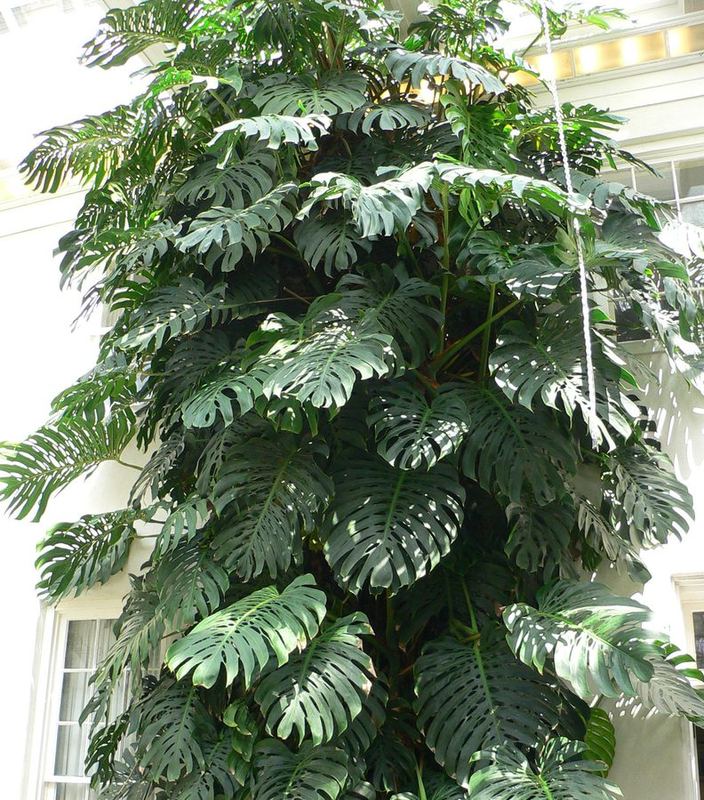
What is specific to this plant
- A mature monstera producing solid leaves with no splits or holes is short of light, not of fertiliser.
- Aerial roots are normal and are not a sign of trouble. Do not cut them off; they anchor the plant as it climbs.
- Monstera roots want air as much as water, which is why a dense peat-heavy mix causes trouble that the same watering in a chunky mix would not.
What it could be, and how to tell
These look alike in a photograph, so each one below lists what you would ALSO see if that is the cause. Work down the list and stop at the one where the other symptoms match too.
1. New leaves arriving solid, with no splits
What else you would see
- new leaves smaller and entire, while older ones are fenestrated
- growth continuing but not maturing
- a position further from the window than the plant used to be
- no change in watering to account for it
What to do
- Move it into brighter indirect light and turn it regularly.
- Give it something to climb, since fenestration also comes with maturity and height.
- Do not increase feeding, which does not affect fenestration.
2. Not enough light
What else you would see
- long bare stretches of stem between the leaves
- each new leaf smaller than the last
- lower leaves shed while the growing tip carries on
What to do
- Move it to bright indirect light.
- Cut back the stretched growth. It will not compact again on its own, and cutting back is what triggers branching.
- Turn the pot every couple of weeks so it grows evenly.
3. The season
What else you would see
- the pause started in autumn and has continued through winter
- the existing leaves look healthy and are not dropping
- shorter days and lower light than in summer
What to do
- Wait for spring. Reduce watering to match the lower demand.
- Do not feed a resting plant. Fertiliser it cannot use accumulates as salt in the mix.
4. Rootbound, or soil that is worn out
What else you would see
- roots circling the inside of the pot or escaping the drainage holes
- water running straight through with almost no absorption
- two or more years in the same pot, and smaller new growth each season
What to do
- Repot one size up in spring into fresh chunky, airy aroid mix, teasing the outer roots loose.
- Feed during the growing season, following the instructions on the label of whatever you buy.
5. Nothing left in the mix
What else you would see
- two years or more in the same mix with no feeding
- pale new growth that is smaller than the old growth
- water running straight through a mix that has shrunk in the pot
What to do
- Repot into fresh chunky, airy aroid mix in spring.
- Feed during the growing season only, following the label on the product you buy.
6. Roots damaged by overwatering
What else you would see
- yellowing that starts on the lowest, oldest leaves and works upward
- stems soft or dark at the soil line, sometimes with a sour smell
- soil or mix still wet several days after watering, when this much should have dried: the top two to three inches
- small flies around the pot, which breed only in constantly wet soil
What to do
- Stop watering and let it dry down this far: the top two to three inches.
- Check that the pot drains and empty any saucer or decorative outer pot it sits in. Water held out of sight keeps the mix wet whatever you change above it, and it stays invisible until you lift the pot.
- If the roots are soft and brown, trim them back to firm tissue with a blade sterilised first and repot into fresh chunky, airy aroid mix.
Common questions
How fast should a monstera grow?
It varies enormously by species and by season. The useful comparison is against the same plant last spring, not against someone else's. A plant that grew well last summer and has paused in December is behaving normally.
Will fertiliser make it grow?
Only if a nutrient shortage is what is holding it back, which is much rarer than it is assumed to be. Feeding a plant that is short of light does nothing useful and builds up salts in the mix.
Should I repot to encourage growth?
If it is genuinely rootbound, yes. If there is still mix and room in the pot, no. Moving a plant into a much larger pot slows it down, because the extra wet mix nothing is drinking from is where rot starts.
Is a monstera poisonous to cats, dogs or children?
Monstera contains calcium oxalate crystals and is widely listed as harmful to pets and children if chewed. We do not tell you that any plant is safe. If a pet or a child may have chewed any part of one, contact a vet, or Poison Control on 1-800-222-1222 in the US, immediately rather than waiting to see what happens.
Before you act on any of this
This is general plant care guidance for a plant, not advice about people or animals. We never tell you whether a plant is safe to eat or touch, and we never tell you a plant is safe for a child or a pet. If a child or animal may have eaten any part of a plant, contact Poison Control (US 1-800-222-1222) or a vet immediately rather than reading further.
Treatment advice here is deliberately category level. We do not give product names, mixing ratios or application intervals. Whatever the label on the product in your hand says is the instruction that counts, and following it is your responsibility.
Where this comes from
The general horticultural facts behind this differential come from published university extension and Royal Horticultural Society guidance. What is specific to this plant, and the order the causes are ranked in, is ours, and the methodology page says where that reasoning stops being reliable.
- Low Light Impacts on Indoor PlantsUniversity of Maryland Extension
- Diagnosing Houseplant Problems from Improper Environmental ConditionsIowa State University Extension and Outreach
- Repotting HouseplantsPenn State Extension
- Fertilizer Toxicity or High Soluble Salts in Indoor PlantsUniversity of Maryland Extension
- How to grow houseplantsRoyal Horticultural Society
Other monstera problems
- Monstera leaves turning yellow
- Monstera leaves curling
- Monstera leaves turning brown
- Monstera root rot
- Monstera drooping
- Monstera brown tips
- Monstera black spots
Not sure which one it is?
PlantRx is an iPhone app that reads the photo and gives you the same kind of ranked differential you just read, for your plant specifically, with the evidence it based each answer on. The first diagnosis is free, in full. There is no subscription and no account.